sadako and the thousand paper cranes pdf
Sadako and the Thousand Paper Cranes PDF: A Comprehensive Overview
Sadako and the PDF version offer accessible learning, with 144 pages and 702 KB file size, detailing her story and inspiring peace movements globally.
Historical Context of Sadako Sasaki
Sadako Sasaki’s life unfolded in the shadow of a devastating historical event: the atomic bombing of Hiroshima on August 6, 1945. Born in 1943, she was a young girl living less than two kilometers from the hypocenter when the bomb detonated. Her early childhood was marked by the immediate aftermath of the bombing, witnessing widespread destruction and suffering.
While initially appearing unharmed, Sadako, along with many others exposed to radiation, later developed leukemia. This tragic illness emerged as a direct consequence of the atomic fallout. Her story became a poignant symbol of the human cost of nuclear warfare, representing the long-term health effects experienced by survivors – known as hibakusha. The context of post-war Japan, grappling with recovery and the invisible threat of radiation, is crucial to understanding the profound impact of Sadako’s brief life and enduring legacy.
The Atomic Bombing of Hiroshima
On August 6, 1945, the United States dropped an atomic bomb, codenamed “Little Boy,” on the Japanese city of Hiroshima. This event marked the first use of nuclear weaponry in warfare, instantly killing an estimated 70,000-80,000 people. The blast radius and subsequent firestorm leveled the city, reducing buildings to rubble and causing unimaginable devastation.
Thousands more succumbed to injuries and radiation sickness in the weeks, months, and years following the bombing. The attack aimed to hasten Japan’s surrender during World War II, but it came at a horrific human cost. The bombing’s legacy extends beyond the immediate casualties, encompassing the long-term health effects of radiation exposure, including increased rates of cancer, like the leukemia that afflicted Sadako Sasaki. The event remains a stark reminder of the destructive power of nuclear weapons and the urgent need for peace.
Sadako’s Early Life and Family
Sadako Sasaki was born on January 7, 1943, in Hiroshima, Japan, to Shigeo and Kimiko Sasaki. She was the middle child, with an older brother, Masahiro, and a younger brother, Koji. Her early life was relatively peaceful, filled with the typical joys and routines of childhood, despite the hardships of wartime Japan. The family lived approximately a mile from the city center, and Sadako enjoyed school, running races, and playing games with her siblings and friends.
Her father, Shigeo, was a teacher, and her mother, Kimiko, worked diligently to provide for the family. They instilled in Sadako values of kindness, resilience, and a strong work ethic. However, this idyllic existence was shattered when the atomic bomb was dropped on Hiroshima in August 1945. The bombing irrevocably altered the course of Sadako’s life and the lives of her family, setting in motion the tragic events that would later inspire a global movement for peace.
Development of Leukemia
In November 1955, Sadako Sasaki began experiencing swelling in her lymph nodes, initially dismissed as post-radiation effects. However, her condition rapidly deteriorated, leading to a diagnosis of acute myelogenous leukemia – a direct consequence of the atomic bomb’s radiation exposure. This devastating illness, often referred to as “atomic bomb disease,” manifested with symptoms including fever, bruising, and increasing weakness.
Hospitalized at the Hiroshima Red Cross Hospital, Sadako faced a grim prognosis. Doctors predicted a limited lifespan, and treatment options were severely constrained given the limited medical resources available at the time. Despite the pain and suffering, Sadako displayed remarkable courage and determination. It was during this period of illness that she began folding paper cranes, inspired by the legend promising a wish granted upon completing one thousand.

The Legend of the Thousand Paper Cranes
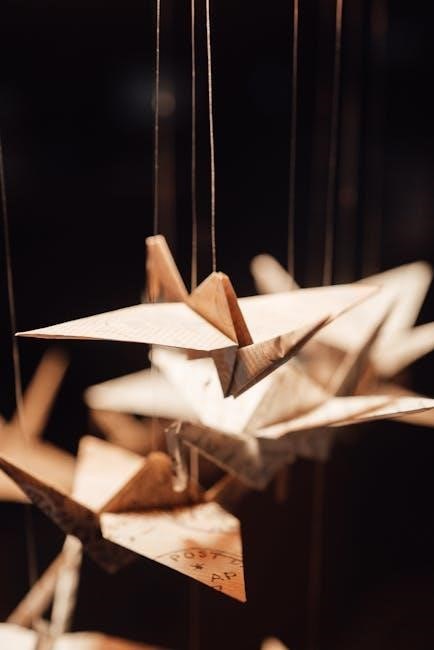
Origami cranes symbolize longevity and healing in Japanese culture, promising a wish fulfillment upon completion of a thousand, deeply connected to Sadako’s story.
Origins of the Origami Crane Tradition
The ancient Japanese tradition of origami, the art of paper folding, boasts a rich history interwoven with cultural beliefs and symbolism. While the precise origins are debated, early forms of paper folding likely emerged alongside the introduction of paper itself from China around the 6th century CE. Initially, origami was reserved for ceremonial purposes, particularly within Shinto religious practices, and associated with the upper classes due to the expense of paper.
The crane, or tsuru, quickly ascended to prominence as a favored subject for origami. This is largely due to its significant role in Japanese folklore. The crane is revered as a symbol of longevity, happiness, and good fortune, believed to live for a thousand years. Consequently, folding a thousand paper cranes – senbazuru – became a popular custom, promising the fulfillment of a wish or recovery from illness.
This tradition gained profound resonance with Sadako Sasaki’s story, transforming the senbazuru into a powerful emblem of peace and hope, particularly in remembrance of the victims of the atomic bombing of Hiroshima. The practice continues to be a poignant expression of compassion and a testament to the enduring power of cultural symbolism.
The Promise of a Wish
Central to the legend surrounding the origami crane is the deeply held belief in its power to grant a wish. This promise stems from ancient Japanese folklore, where the crane – tsuru – symbolizes longevity and happiness, traditionally believed to live for a thousand years. Completing the arduous task of folding one thousand paper cranes, known as senbazuru, was thought to invoke a divine response, fulfilling the folder’s heartfelt desire.
The wish associated with senbazuru often revolved around healing from illness or achieving a significant life goal. This belief provided solace and hope to those facing adversity, offering a tangible act of faith and perseverance. Sadako Sasaki, tragically diagnosed with leukemia after the Hiroshima bombing, embraced this tradition, fervently folding cranes in the hope of overcoming her illness.
Though Sadako didn’t reach her thousandth crane before her passing, her unwavering dedication transformed the senbazuru into a global symbol of peace, remembrance, and the enduring power of hope, even in the face of unimaginable suffering. The promise of a wish, therefore, evolved beyond personal gain to encompass a collective yearning for a world free from conflict.
Symbolism of the Crane in Japanese Culture
The crane, or tsuru, holds a profoundly significant place in Japanese culture, extending far beyond its aesthetic beauty. Revered for centuries, it embodies longevity, happiness, and good fortune, largely due to its exceptionally long lifespan – traditionally believed to live for a thousand years. This association with longevity naturally led to the crane becoming a symbol of a long and peaceful life.
In folklore, cranes are often depicted as messengers of the gods, possessing a celestial quality. They represent fidelity and marital happiness, frequently appearing in wedding decorations and artwork. The practice of origami, particularly folding cranes, is deeply intertwined with these symbolic meanings, transforming a simple paper fold into a potent expression of hope and well-being.
The Sadako story powerfully amplified the crane’s symbolism, associating it with peace and remembrance. The image of a thousand cranes – senbazuru – became a universal plea for an end to nuclear weapons and a testament to the resilience of the human spirit, solidifying the crane’s enduring legacy within Japanese and global consciousness.
Eleanor Coerr’s “Sadako and the Thousand Paper Cranes”
Eleanor Coerr’s impactful 1977 novel brought Sadako’s story to a wider audience, inspiring numerous translations and becoming a cornerstone of peace education globally.
Publication and Reception of the Book
Eleanor Coerr’s “Sadako and the Thousand Paper Cranes” was first published in 1977 and quickly garnered significant attention, becoming a widely read and critically acclaimed work for young readers. The book’s initial reception was overwhelmingly positive, praised for its sensitive portrayal of Sadako Sasaki’s story and its powerful message of peace. It resonated deeply with audiences, prompting widespread discussion about the horrors of the atomic bombing of Hiroshima and the importance of nuclear disarmament.
The novel’s success led to numerous translations, making it accessible to readers around the world, including Russian language editions. Its enduring popularity is evidenced by its continued presence in school curricula and library collections. The availability of the story in PDF format has further expanded its reach, allowing for easy access and distribution. The book’s impact extends beyond literature, serving as a catalyst for peace education initiatives and inspiring countless individuals to advocate for a world free from nuclear weapons. It remains a poignant and relevant reminder of the human cost of war.
Key Characters in the Story
Sadako Sasaki is the central and most compelling character, a young girl grappling with leukemia caused by the Hiroshima bombing, whose hope fuels her paper crane folding. Her brother, Masahiro, provides unwavering support and companionship, often engaging in playful banter while witnessing her struggle. Mother embodies quiet strength and resilience, offering comfort and care during Sadako’s illness.
Father represents the lingering trauma of the bombing and the family’s collective grief, striving to maintain normalcy amidst hardship. Kenji and Shizuko, Sadako’s classmates, demonstrate the power of friendship and collective action, joining her in the crane-folding endeavor. These characters, vividly portrayed in the PDF version of Eleanor Coerr’s novel, collectively illustrate the human impact of war and the enduring spirit of hope. Their interactions highlight themes of family, friendship, and the search for meaning in the face of unimaginable loss, making them integral to the story’s emotional resonance.
Plot Summary and Narrative Structure
Eleanor Coerr’s Sadako and the Thousand Paper Cranes, readily available as a PDF, unfolds through a blend of realistic fiction and Japanese folklore. The narrative begins with Sadako, a vibrant young girl, developing leukemia post-Hiroshima. Inspired by the legend promising a wish granted upon folding a thousand paper cranes, she embarks on this arduous task, hoping for recovery.
The story alternates between Sadako’s present struggle and flashbacks detailing her life before the illness, including the atomic bombing and its aftermath. This structure emphasizes the contrast between her former vitality and current suffering. The PDF allows readers to easily navigate this interwoven timeline. As Sadako’s condition worsens, the narrative intensifies, culminating in her death before completing the cranes. However, her classmates finish the task in her memory. The novel’s structure effectively conveys the emotional weight of Sadako’s journey and the enduring power of hope, even in tragedy.
Themes Explored in the Novel
Sadako and the Thousand Paper Cranes, often accessed as a PDF, powerfully explores several profound themes. Central is the devastating impact of war and nuclear weapons, vividly portraying the long-term consequences on individuals and communities. The story doesn’t focus on battles, but on the human cost – specifically, the suffering of an innocent child.
Hope and perseverance are also prominent, embodied in Sadako’s unwavering determination to fold the cranes despite her declining health. The legend itself symbolizes hope and the belief in miracles. Furthermore, the novel examines the importance of friendship and community, as Sadako’s classmates rally around her, continuing her work after her death. The readily available PDF format facilitates discussions on these complex themes in educational settings. Ultimately, the book champions peace and serves as a poignant reminder of the need for a world free from nuclear threat.
The Book as a PDF Resource
Sadako and the Thousand Paper Cranes’ PDF availability provides free, accessible learning; downloads require ethical consideration, offering a 702 KB, 144-page resource.
Availability of “Sadako and the Thousand Paper Cranes” PDF
The digital version of Eleanor Coerr’s poignant novel, “Sadako and the Thousand Paper Cranes,” is readily available in PDF format through various online platforms. Numerous websites offer free downloads, catering to educators, students, and individuals seeking to engage with this impactful story. These resources often include the complete text of the 144-page book, typically weighing around 702 KB, making it easily accessible even with limited bandwidth.
Searching online using keywords like “Sadako and the Thousand Paper Cranes PDF download” will yield a multitude of results. Platforms dedicated to free ebook distribution, educational resource sharing, and online libraries frequently host the PDF version. It’s also possible to find the book in PDF format through digital lending libraries or as a supplementary material for lesson plans focused on Japanese culture, peace education, and the aftermath of the atomic bombing of Hiroshima. The widespread availability underscores the book’s enduring legacy and its continued relevance in fostering empathy and understanding.
Legality and Ethical Considerations of PDF Downloads
Downloading a PDF of “Sadako and the Thousand Paper Cranes” raises important legal and ethical considerations. While many sites offer free downloads, it’s crucial to understand copyright laws. The book remains under copyright protection, meaning unauthorized distribution constitutes infringement. Downloading from unofficial sources may support piracy and deprive the author and publisher of rightful compensation.
Ethically, supporting creators is paramount. Consider purchasing a legitimate copy of the book – either physical or digital – to ensure Eleanor Coerr’s work continues to be valued and accessible. Utilizing library resources, which often provide legal access to ebooks and PDFs, is another responsible option.
If a PDF is offered freely by the publisher or a reputable educational institution, it’s generally considered legal and ethical. However, exercising caution and verifying the source’s legitimacy before downloading is always advisable. Respecting intellectual property rights ensures the continued creation and dissemination of impactful stories like Sadako’s.
Benefits of Reading the PDF Version
Accessing “Sadako and the Thousand Paper Cranes” as a PDF offers numerous advantages. Portability is a key benefit; the 702 KB file can be easily stored on various devices – laptops, tablets, and smartphones – allowing reading anytime, anywhere. This accessibility is particularly valuable for students and educators. The PDF format facilitates convenient sharing with classmates or students, fostering collaborative learning and discussion.
Furthermore, PDF readers often include features like adjustable font sizes and search functionality, enhancing readability and research capabilities. Digital copies are also environmentally friendly, reducing paper consumption. The 144-page book is readily available for quick reference and study.
For educational purposes, PDFs enable easy annotation and highlighting, aiding comprehension and note-taking. Digital versions also support text-to-speech functionality, benefiting learners with visual impairments or different learning styles. Overall, the PDF format provides a flexible and efficient way to engage with this poignant story.
Educational Applications
Sadako’s story, via PDF, inspires 7th-grade lesson plans focused on Japanese culture and origami, fostering peace education through impactful narratives and activities.
Lesson Plans for Middle School Students
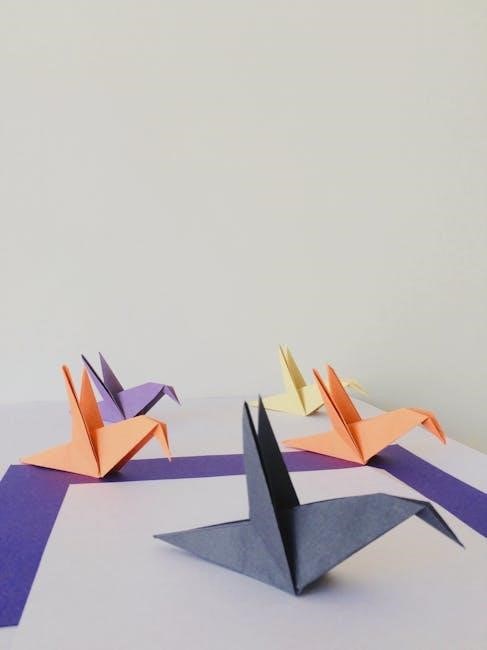
Utilizing the Sadako and the Thousand Paper Cranes PDF, educators can craft compelling lesson plans for middle school students, fostering empathy and critical thinking. A core activity involves students creating their own origami cranes, mirroring Sadako’s hopeful endeavor. This hands-on approach connects directly to the narrative’s emotional core.
Lessons should explore the historical context of the Hiroshima bombing, prompting discussions about the consequences of war and the importance of peace. Analyzing Eleanor Coerr’s writing style and narrative structure enhances literacy skills. Students can research the symbolism of the crane in Japanese culture, deepening their understanding of the story’s cultural significance.

Further activities include writing reflective journals from Sadako’s perspective, debating the ethics of nuclear warfare, and designing peace posters. The PDF format allows for easy annotation and collaborative learning. Assessment can involve presentations, essays, or creative projects demonstrating comprehension of the story’s themes and historical background. These plans aim to transform a poignant tale into a powerful learning experience.
Using the Story to Teach Japanese Culture
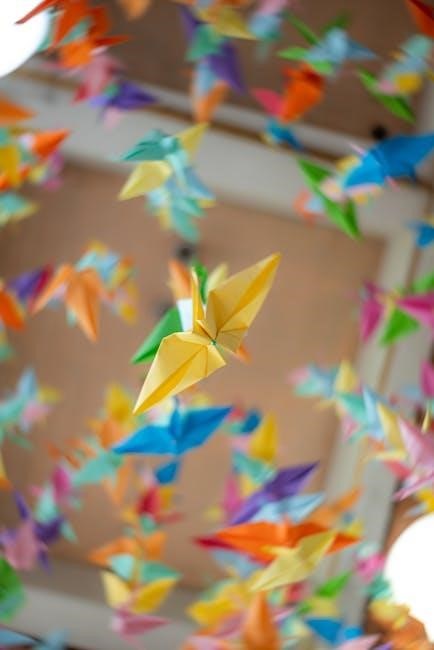
The Sadako and the Thousand Paper Cranes PDF serves as a potent gateway to exploring Japanese culture for middle school students. Beyond the tragic narrative, the story beautifully illustrates core Japanese values like perseverance, hope, and the importance of community. Lessons can begin with an examination of origami – origami – its history, and its symbolic weight within Japanese traditions.
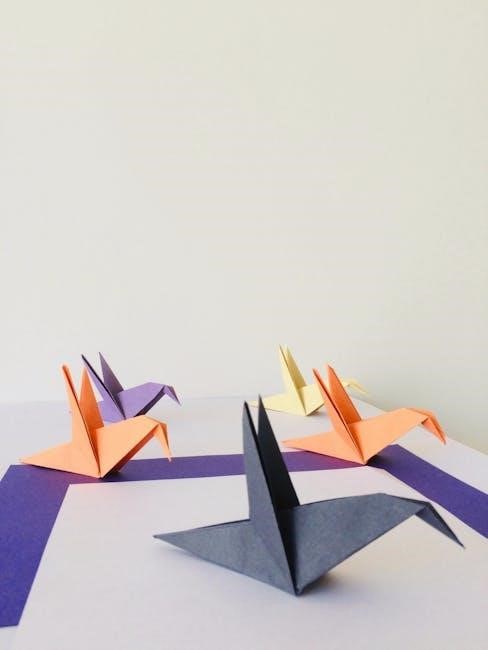
Discussions should extend to the significance of the crane (tsuru) as a symbol of longevity, happiness, and peace. Exploring the legend of the thousand origami cranes and the promise of a wish granted upon completion provides cultural context. Students can research traditional Japanese art forms, music, and societal norms.
Comparing and contrasting Japanese perspectives on war and peace with Western viewpoints fosters critical thinking. Utilizing the PDF allows for visual aids showcasing Japanese landscapes, clothing, and daily life. Activities like learning basic Japanese phrases or preparing a traditional Japanese meal further immerse students in the culture, enriching their understanding beyond the historical event.
Origami Activities and Integration
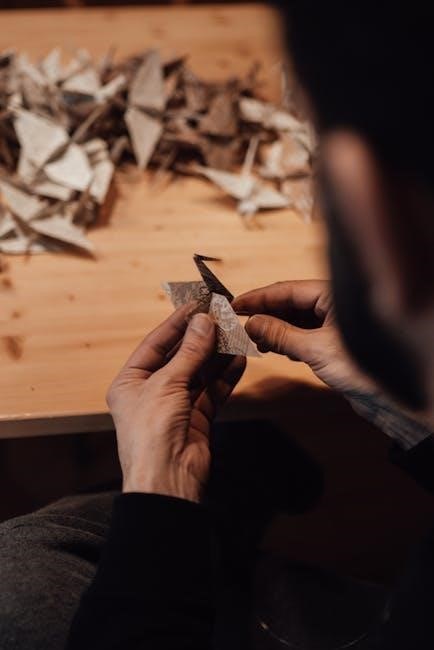
Integrating origami directly with the study of Sadako and the Thousand Paper Cranes PDF offers a hands-on, emotionally resonant learning experience. Students can begin by learning to fold a simple origami crane, mirroring Sadako’s act of hope and resilience. This practical activity fosters patience and fine motor skills while connecting them directly to the story’s central symbol.
Expanding beyond the basic crane, students can explore other traditional origami designs, researching their symbolism and cultural significance. A classroom project could involve collectively folding one thousand cranes, creating a visual representation of peace and remembrance, mirroring the story’s core message.
The PDF version of the book can be used as a visual guide during origami sessions, referencing illustrations and the narrative context. Students can create origami displays, write reflective pieces about their experience, or even design their own origami-inspired artwork, deepening their engagement and understanding of both the art form and Sadako’s legacy.
Impact and Legacy
Sadako’s story, popularized by the PDF of Coerr’s book, profoundly impacted peace movements and inspired the Children’s Peace Monument in Hiroshima, remaining relevant today.
Sadako’s Influence on Peace Movements
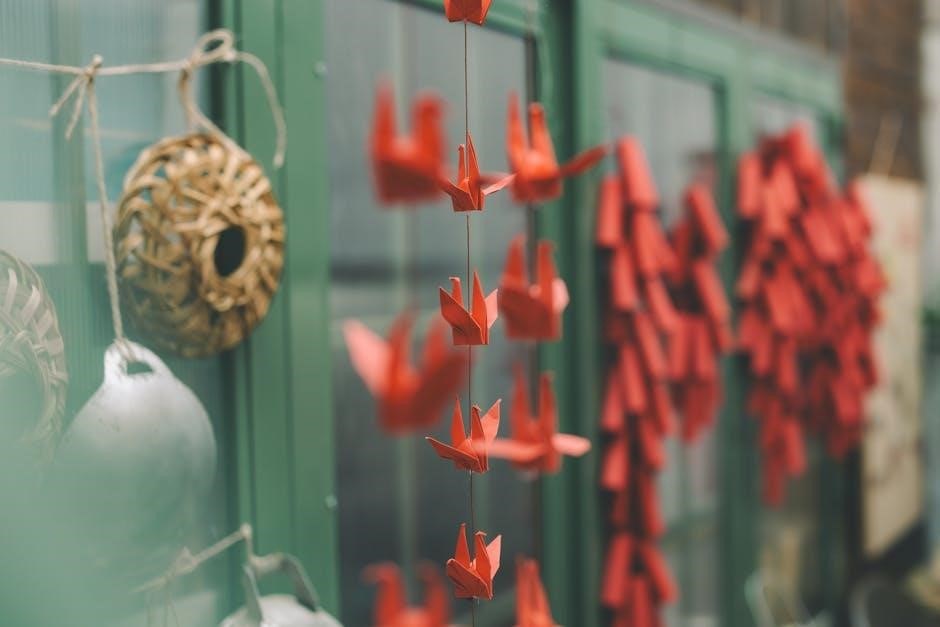
Sadako Sasaki’s poignant story, widely disseminated through resources like the “Sadako and the Thousand Paper Cranes” PDF, has become a powerful symbol within global peace movements. Her unwavering spirit, even in the face of immense suffering caused by the atomic bombing, resonates deeply with advocates for nuclear disarmament and peaceful resolutions.
The narrative, readily available in digital formats, transcends geographical boundaries, fostering empathy and understanding. Schools and educational institutions frequently utilize the PDF version for lessons on the consequences of war and the importance of peace. The image of a young girl folding cranes, hoping for recovery, serves as a potent reminder of the human cost of conflict.
Furthermore, Sadako’s legacy directly inspired the creation of the Children’s Peace Monument in Hiroshima, a testament to the enduring power of her story. Individuals and organizations continue to fold paper cranes as a gesture of peace, sending them to Hiroshima and other locations as symbols of hope and solidarity. The accessibility of the story via PDF ensures its continued influence on future generations committed to building a more peaceful world.
The Children’s Peace Monument in Hiroshima
Erected in memory of Sadako Sasaki and all the children who perished due to the atomic bombing, the Children’s Peace Monument stands as a central symbol of hope and a lasting tribute to her enduring legacy. Inspired by the widespread impact of her story, popularized through resources like the “Sadako and the Thousand Paper Cranes” PDF, the monument serves as a focal point for peace advocacy;
Located in Hiroshima Peace Memorial Park, the monument features a statue of Sadako holding a golden crane, representing her unwavering hope for healing and a world free from nuclear weapons. Visitors from around the globe contribute thousands of paper cranes annually, creating a vibrant and moving display of solidarity.
The readily available PDF version of Eleanor Coerr’s book has played a crucial role in raising awareness about the monument and its significance. It educates individuals about Sadako’s story, encouraging them to visit the park and participate in the tradition of folding and offering cranes. The monument, fueled by the narrative’s reach, continues to inspire generations to strive for peace and remember the devastating consequences of war.
Continued Relevance of Sadako’s Story Today
Sadako Sasaki’s story, powerfully conveyed through resources like the widely accessible “Sadako and the Thousand Paper Cranes” PDF, retains profound relevance in the 21st century. As global tensions persist and the threat of nuclear conflict remains, her experience serves as a stark reminder of the human cost of war and the urgent need for peace.
The narrative, easily shared via digital formats, continues to resonate with students and educators, fostering empathy and critical thinking about historical events. The PDF version facilitates widespread access to her story, promoting discussions about responsibility, resilience, and the pursuit of a more just world.
Furthermore, Sadako’s unwavering hope, symbolized by the thousand paper cranes, inspires ongoing peace movements and advocacy efforts; Her legacy encourages individuals to actively engage in creating a future where such tragedies are never repeated, ensuring her message endures for generations to come, amplified by the story’s continued availability.